
Headspace Analyzer: Complete Guide to Selecting the Right System (2026)
A headspace analyzer is a precision instrument that measures the composition of gases trapped in the empty space above a product inside a sealed container — such as a pharmaceutical vial, MAP food package, or process vessel. It quantifies oxygen (O₂), carbon dioxide (CO₂), and sometimes nitrogen (N₂) at concentrations from 100% down to 0.01%, enabling quality control teams to verify package integrity, predict product shelf life, and demonstrate compliance with standards including USP <1207>, ASTM F2096, and EU GMP Annex 1.
This guide explains what a headspace analyzer does, compares the three core detection technologies, walks through industry-specific applications, and provides a 7-step framework for selecting the right system for your operation.
---
What is a Headspace Analyzer (and What is "Headspace")?
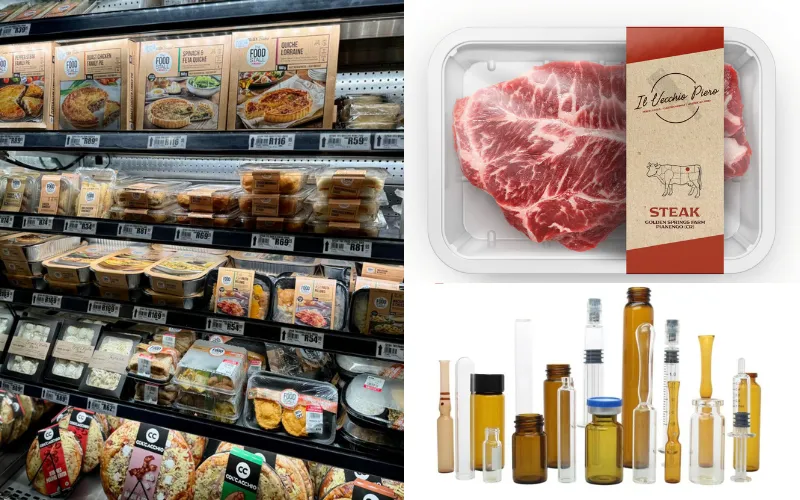
In packaging and pharmaceutical contexts, headspace is the volume of gas above the product inside a sealed container. For a MAP-packaged tray of fresh meat, the headspace contains a modified atmosphere — typically high CO₂ and low O₂ — designed to extend shelf life. For a lyophilized pharmaceutical vial, the headspace should contain almost no oxygen, because residual O₂ degrades sensitive biologics.
A headspace analyzer punctures or interfaces with the sealed container, extracts a small gas sample (typically 1-10 mL), and reports the concentration of each target gas. Modern instruments complete a full analysis in 5-30 seconds, with detection limits as low as 0.01% O₂ for pharmaceutical applications and ±0.1% accuracy for routine food MAP testing.
The term "headspace gas analyzer" is used interchangeably with headspace analyzer. Some manufacturers also market models as "O₂ analyzers" or "MAP analyzers" — these are typically the same instrument category with different application focus.
---
Why Headspace Analysis Matters
1. Food Safety and Shelf Life
In Modified Atmosphere Packaging (MAP), the wrong gas mixture can shorten product shelf life by 30-70%. Fresh red meat packaged at 70% O₂ / 30% CO₂ maintains color and freshness for 7-14 days; the same product packaged in ambient air (21% O₂) spoils in 2-3 days. Headspace analyzers verify that packaging machines deliver the specified gas mixture batch after batch.
2. Pharmaceutical Product Stability
Many injectable biologics, vaccines, and lyophilized drugs degrade in the presence of oxygen. A typical specification might require < 1% residual O₂ in the vial headspace. Without periodic headspace testing during production and stability studies, manufacturers cannot demonstrate compliance with USP <1207> or EU GMP Annex 1, both of which require container closure integrity verification using gas analysis as one accepted method.
3. Container Closure Integrity (CCI)
A vial with a defective stopper or compromised seal will gradually allow ambient air ingress. Trending headspace O₂ over time reveals integrity defects long before the product fails sterility testing. This is increasingly the preferred non-destructive screening method for parenteral products.
4. Process Validation
Regulators expect documented evidence that gas-flush packaging lines, lyophilizers, and capping processes consistently produce within-specification packages. Headspace analyzers provide that quantitative evidence.
---
Headspace Analyzer Detection Technologies Compared
Three core sensor technologies dominate the headspace analyzer market — electrochemical, NDIR, and TDLAS — and two additional configurations (hybrid combos and zirconia sensors) extend their range for specialty use cases. We cover the three core technologies first, then the hybrid/specialty options, then compare all five side-by-side.
Electrochemical Sensors
How it works: An electrochemical cell generates a current proportional to the partial pressure of the target gas (O₂ is the most common). The sample gas diffuses through a membrane, reacts at an electrode, and produces a measurable signal.
Typical specs:
- O₂ range: 0-25% (sometimes 0-100% with extended range cells)
- Accuracy: ±0.1% to ±0.5% absolute
- Sensor lifetime: 12-24 months (consumable)
- Response time: 10-30 seconds
Best for: MAP food packaging where the target is 0-21% O₂ with moderate accuracy needs. Most portable headspace analyzers under $5,000 use electrochemical O₂ cells.
Limitations: Sensor drift over time, lifetime is a consumable cost, sensitive to certain gases (CO, H₂S) that can poison the cell.
---
NDIR (Non-Dispersive Infrared)
How it works: Different gases absorb infrared light at characteristic wavelengths. The sample gas is illuminated by an IR source; the amount of absorbed light at the target wavelength is proportional to the gas concentration.
Typical specs:
- CO₂ range: 0-100%
- Accuracy: ±1% of reading
- Sensor lifetime: 5-10 years (no consumable cell)
- Response time: 5-15 seconds
Best for: CO₂ measurement in MAP, fermentation monitoring, and any application where long sensor life matters. NDIR is the standard for CO₂ in food MAP analyzers.
Limitations: Cannot measure O₂ directly (O₂ has no IR absorption band). Most headspace analyzers combine NDIR (for CO₂) with electrochemical or zirconia (for O₂).
---
TDLAS / Laser-Based Sensors
How it works: A tunable diode laser is scanned across an absorption line of the target gas. The detector measures absorption, calculating concentration from line shape and intensity. This is the same principle as NDIR but with much higher resolution and selectivity.
Typical specs:
- O₂ range: 0-100% (with ppm-level resolution available)
- Accuracy: ±0.01% to ±0.05%
- Lifetime: 10+ years
- Response time: < 5 seconds
Best for: Pharmaceutical vial residual oxygen measurement, especially non-destructive testing of lyophilized vials. TDLAS systems can measure O₂ through the vial wall without piercing the stopper, enabling 100% inspection during stability studies.
Limitations: Cost ($80,000-$300,000 per system). Calibration complexity. Typically benchtop only.
---
Hybrid and Specialty Configurations
The three core technologies above are frequently combined or supplemented to meet specific application needs:
Electrochemical + NDIR Combo — The workhorse of food MAP QC. Electrochemical measures O₂ while NDIR measures CO₂, giving a complete MAP gas profile in a single instrument typically priced $4,000-$15,000. This is what most portable food MAP analyzers use.
Zirconia Sensors — High-temperature ceramic oxygen sensors used in industrial processes (>500°C) and certain low-O₂ continuous monitoring applications where membrane-based electrochemical cells cannot operate. Accuracy ±0.1% O₂, lifetime 5-10 years, typical cost $5,000-$20,000.
---
Quick Comparison Table
| Technology | O₂ Accuracy | CO₂ Accuracy | Lifetime | Typical Cost | Best Application |
|---|---|---|---|---|---|
| Electrochemical | ±0.1-0.5% | N/A | 12-24 mo | $2K-$8K | Food MAP, portable QC |
| NDIR | N/A | ±1% | 5-10 yr | $3K-$10K | CO₂ in MAP, beverage |
| Electrochemical + NDIR combo | ±0.5% | ±1% | 12-24 mo | $4K-$15K | Comprehensive MAP QC |
| TDLAS Laser | ±0.01-0.05% | ±0.01% | 10+ yr | $80K-$300K | Pharmaceutical vials, residual O₂ |
| Zirconia | ±0.1% | N/A | 5-10 yr | $5K-$20K | High-temp, low-O₂ industrial |
---
Applications by Industry
Pharmaceutical Headspace Analysis
Pharmaceutical applications are the most demanding subset of headspace testing. Key use cases:
- Lyophilized vials: Verify residual O₂ < 1% post-stoppering
- Liquid parenterals: Confirm O₂ purge effectiveness in pre-filled syringes
- Ampoules: Spot-check sealing integrity during production
- Stability studies: Track headspace O₂ trend over 6-36 month studies
- Container closure integrity (CCI): Non-destructive screening per USP <1207>
Pharmaceutical headspace analyzers typically require:
- 21 CFR Part 11 compliant software (electronic records / audit trail)
- IQ/OQ/PQ documentation
- Validated against NIST-traceable gas standards
- Either piercing (destructive) or laser (non-destructive) sample interface
High-end TDLAS systems can run $80,000-$300,000, but recent advances in electrochemical + NDIR hybrid analyzers have brought lab-grade accuracy into the $3,000-$8,000 range — making rigorous QC accessible to mid-market pharma and contract manufacturing operations that previously couldn't justify the capex.
---
Food MAP Packaging Headspace Analysis
Modified Atmosphere Packaging extends shelf life through controlled gas mixtures. Common applications:
| Product | Typical MAP Mix | Target Variation |
|---|---|---|
| Red meat (beef, lamb) | 70% O₂ + 30% CO₂ | ±2% |
| Poultry, pork | 30% CO₂ + 70% N₂ | ±2% |
| Fish | 40% CO₂ + 30% O₂ + 30% N₂ | ±3% |
| Hard cheese | 100% CO₂ or 50/50 CO₂/N₂ | ±5% |
| Salads, fresh-cut produce | 5% O₂ + 5-10% CO₂ + balance N₂ | ±1% |
| Coffee | 0% O₂, 100% N₂ (or vacuum) | < 0.5% O₂ |
| Bakery (bread, cake) | 100% CO₂ or 50% CO₂ / 50% N₂ | ±3% |
A portable food MAP headspace analyzer typically uses electrochemical O₂ + NDIR CO₂, with accuracy of ±0.5% O₂ and ±1% CO₂. These instruments cost $3,000-$8,000 and are deployed at packaging line QC stations.
For high-throughput operations, in-line headspace samplers integrate with packaging machines to test 1 in N packages automatically, flagging out-of-spec units before they ship.
---
Industrial and Research Applications
Beyond pharmaceutical and food packaging, headspace analyzers serve:
- Battery production: Verify electrolyte container atmosphere
- Aerosol products: Confirm propellant fill
- Wine and beer: Track O₂ ingress during bottling
- Diagnostic devices: Measure blood gas reference standards
- Research: Fermentation kinetics, soil respiration, biodegradation studies (ISO 14855)
---
Standards and Regulations Affecting Headspace Analysis
| Standard / Regulation | Region | Application |
|---|---|---|
| USP <1207> | Global (FDA-recognized) | Container closure integrity testing — includes headspace gas analysis as accepted method |
| USP <1207.1>, <1207.2> | Global | Method selection guidance |
| ASTM F2096 | Global | Detection of gross leaks by internal pressurization (complementary to headspace) |
| EU GMP Annex 1 | EU | Sterile product manufacturing — requires CCI verification |
| EU GMP Annex 11 | EU | Electronic records for analytical data |
| 21 CFR Part 11 | USA | Electronic records and signatures |
| ASTM F1307 | Global | Modified Atmosphere Packaging testing |
| ISO 14912 | Global | Gas analysis — Conversion of gas mixture composition data |
| ISO 17025 | Global | Calibration laboratory accreditation |
| ChP 9621 | China | Pharmaceutical packaging materials — general requirements (four properties + one stability framework, Chinese Pharmacopoeia) |
Pharmaceutical operations using headspace analyzers must also comply with general cGMP requirements: calibration traceability, instrument qualification (IQ/OQ/PQ), validated software, and documented operator training.
---
Key Specifications to Evaluate
When specifying a headspace analyzer, evaluate these parameters in order of priority for your application:
1. Gases Measured
- MAP food: O₂ + CO₂ minimum; some applications also need N₂
- Pharmaceutical: O₂ primary; sometimes CO₂ or moisture
- Specialty: H₂S, CO, He, depending on industry
2. Detection Range and Accuracy
- Map your target operating range to instrument specifications
- A 0-100% O₂ analyzer with ±2% accuracy is unsuitable for 0.5% O₂ pharmaceutical specs
- Conversely, a 0-1% O₂ ultra-low instrument is overkill for 70% O₂ red meat MAP
3. Sample Volume
- Small pharmaceutical vials may only contain 0.5-3 mL of headspace
- Some analyzers require 5-10 mL minimum sample volume — incompatible with small containers
- Verify required minimum sample volume matches your container
4. Destructive vs Non-Destructive
- Destructive (piercing) instruments puncture the package, consume the sample, and destroy the product. Used for QC sampling.
- Non-destructive (laser-based) instruments measure through transparent container walls. Required for 100% inspection of high-value vials.
5. Portability
- Portable / handheld: ~$3K-$10K, battery operated, ideal for in-line QC checks
- Benchtop: ~$10K-$30K, higher accuracy, lab use
- In-line / automated: $30K-$150K, integrated with packaging line, 100% inspection
6. Software and Data Integrity
- 21 CFR Part 11 compliant audit trail for regulated industries
- Data export (CSV, PDF, LIMS integration via OPC-UA or Ethernet/IP)
- Multi-user role-based access
7. Calibration Requirements
- Single-point vs multi-point calibration
- Frequency (daily, weekly, monthly)
- Reference gas standards required
- Auto-calibration vs manual
---
Case Study: National Supermarket Chain Implements MAP Quality Control
A national retail supermarket chain in the Caucasus region operates a central meat processing and MAP packaging facility supplying 200+ stores. Prior to implementing systematic headspace QC, customer complaints of premature meat discoloration occurred at 0.8% of units — well above industry benchmark of 0.2%.
After auditing the production line, the QC team identified inconsistent gas mixing as the root cause. A portable electrochemical + NDIR headspace analyzer (O₂ + CO₂) was deployed at the packaging line outlet. Every 30 minutes, 5 random packages were tested. Out-of-specification units (defined as < 60% O₂ or > 35% CO₂) triggered immediate machine recalibration.
Results after 6 months:
- Customer complaints reduced from 0.8% to 0.15%
- Shelf life extended from average 9.2 days to 11.4 days
- ROI on $2,390 analyzer recovered in 3 months from reduced waste alone
The same instrument was subsequently used to validate new packaging machine commissioning and supplier audit of film barrier performance.
---
7-Step Headspace Analyzer Selection Framework
Step 1: Define Your Application
Pharmaceutical vials, food MAP, industrial process — each has different priority requirements. Be specific about product type and container.
Step 2: List Required Gases
O₂ only? O₂ + CO₂? Add N₂? Specify all gases you must measure.
Step 3: Specify Detection Range and Accuracy
What concentration range will you encounter? What accuracy is required by your specifications or regulations?
Step 4: Determine Sample Type
Destructive (piercing) is fine for QC sampling. Non-destructive (laser) is required for high-value vials and 100% inspection.
Step 5: Choose Portable vs Benchtop vs In-line
Match instrument format to workflow. Most food MAP operations use portable; most pharmaceutical labs use benchtop or in-line.
Step 6: Verify Regulatory Compliance
For pharma: 21 CFR Part 11 software, IQ/OQ/PQ documentation, calibration traceability.
For food: calibration certificates and supplier documentation.
Step 7: Total Cost of Ownership
Initial cost + consumables (electrochemical cells every 12-24 months) + calibration gases + service contract + downtime.
---
Common Mistakes When Buying a Headspace Analyzer
- Choosing on price alone: Cheapest instrument may use 0-25% O₂ cell when you need 0-5% range
- Ignoring sample volume requirements: 5 mL minimum sample volume is incompatible with 2 mL vials
- Forgetting calibration gas supply: Some analyzers require specialty gas mixtures with monthly recalibration
- Not specifying software requirements upfront: Adding 21 CFR Part 11 compliance after purchase is rarely possible
- Buying destructive when non-destructive is needed: Destroying expensive product samples for routine QC adds cost
- Skipping IQ/OQ/PQ requirement: Pharmaceutical purchases without proper qualification documentation cannot be used for GMP work
- Underestimating training: Operators need training on sampling technique, not just button-pressing
---
Frequently Asked Questions
What is the difference between a headspace analyzer and an O₂ analyzer?
A headspace analyzer is specifically designed to sample gas from sealed containers and measure composition — typically with a piercing needle or non-destructive laser interface. An O₂ analyzer is a more general category that measures oxygen in flowing gas streams, ambient air, or other configurations. Many headspace analyzers contain an O₂ sensor as part of a multi-gas instrument.
How often does a headspace analyzer need calibration?
Frequency depends on application criticality and technology:
- Pharmaceutical applications: daily calibration check + weekly multi-point calibration
- Food MAP QC: weekly calibration check + monthly multi-point
- Industrial monitoring: monthly
Always follow the manufacturer's recommendation and applicable SOP.
What is the typical lifetime of an electrochemical O₂ sensor?
12-24 months under normal use. Lifetime is shortened by:
- Continuous exposure to high O₂ (above 80%)
- Exposure to interfering gases (CO, H₂S, CO₂ at very high levels)
- Extended storage in dry conditions
- Temperature extremes (above 40°C)
Most manufacturers offer replacement cells for $200-$500.
Can a portable headspace analyzer be used for pharmaceutical applications?
Yes, but only with caveats:
- Software must support 21 CFR Part 11 audit trail (most portables do not)
- Calibration must be NIST-traceable (verify with manufacturer)
- IQ/OQ/PQ documentation must be available
- Sample piercing system must be designed for sterile / pharmaceutical use (not just food)
For most pharmaceutical applications, benchtop or laser-based instruments are recommended over portable.
What sample volume does a headspace analyzer require?
Most portable analyzers require 5-10 mL minimum sample volume. Specialty pharmaceutical analyzers can work with 0.5-3 mL samples. Laser-based (non-destructive) systems require no sample extraction — they measure through the container wall.
If your container is small, verify minimum sample volume before purchasing.
How accurate are portable headspace analyzers compared to benchtop?
Portable: typically ±0.5% O₂ and ±1% CO₂
Benchtop: typically ±0.1% O₂ and ±0.5% CO₂
Laser: typically ±0.01-0.05% O₂
For food MAP applications, portable accuracy is usually sufficient. For pharmaceutical residual O₂ measurement, benchtop or laser is required.
Do I need TDLAS laser technology for my application?
TDLAS is required when:
- You need non-destructive testing (testing through container wall)
- You need 100% inspection (not statistical sampling)
- You require < 0.1% O₂ accuracy
- Your samples are expensive (cannot afford to destroy them)
For routine food MAP QC, electrochemical + NDIR is more cost-effective.
Can I use a food MAP headspace analyzer for pharmaceutical applications?
Generally no. Food MAP analyzers typically lack:
- 21 CFR Part 11 compliant software
- IQ/OQ/PQ documentation
- Sterile-compatible sample interface
- Calibration traceability documentation
Using a food MAP analyzer in a GMP environment will fail FDA / EMA inspections.
---
Next Steps: Requesting a Quote
Selecting the right headspace analyzer requires matching technology to application requirements. The wrong choice means either overspending on capability you don't need or underspending on capability that fails regulatory or operational requirements.
To receive a tailored quote based on your specific application:
- Define your container type (vial size, MAP tray, ampoule, IV bag)
- List target gases and required accuracy
- Specify regulatory environment (pharmaceutical GMP, food QC, industrial)
- Estimate testing volume (samples per day or per month)
- Identify integration needs (LIMS connectivity, software requirements)
We respond within 24 hours with technology recommendations, comparative quotations, and application support contacts.
---
Related Resources
- Sensor Technology Comparison: Electrochemical vs NDIR vs Laser
- MAP Headspace Sampling Best Practices
- Pharmaceuticals: Micro-Volume Headspace Analysis for Ampoules
- Headspace Gas Analysis for MAP — Complete Guide
---
---
About the Author
Kenji Tanaka — Senior Application Engineer, KindHold Material Co.
15 years in pharmaceutical and food packaging validation, with deep experience in MAP gas analysis, container closure integrity testing, and USP <1207> / EU GMP Annex 1 compliance. Previously consulted for pharmaceutical contract manufacturers in Japan and Southeast Asia on residual oxygen measurement protocols and lyophilization headspace specifications. ISPE member.
Have a specific application question? Reach the engineering team directly at info@headspacegasanalyzer.com.
---
Last reviewed: 2026-05-18
Review scope: Standards references (USP <1207>, ASTM F2096, EU GMP Annex 1/11, 21 CFR Part 11, ChP 9621, ISO 14912, ISO 17025); pricing ranges Q2 2026; application matrix; case study data.